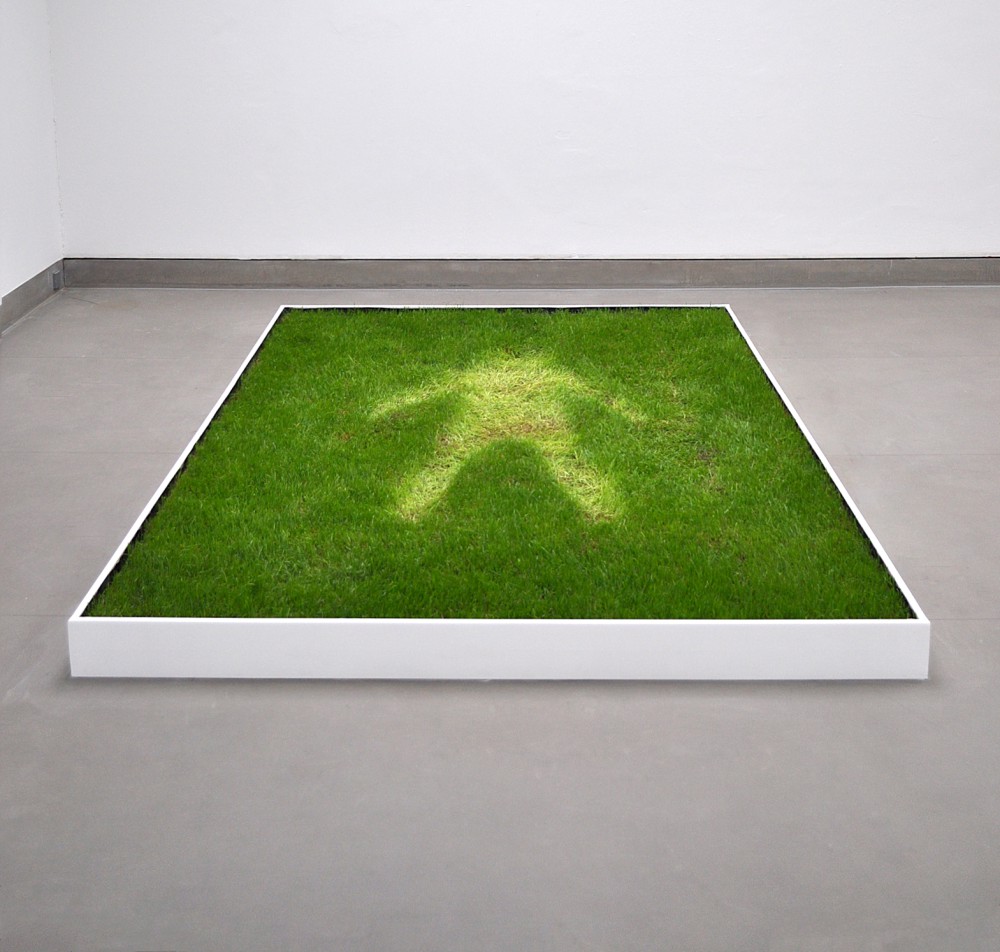
Angelika Wischermann, 2019
Related works: Quite Well-Situated, Sat Through
For many years, I have worked as a performance artist, with a primary focus on carrying out specific actions and activities. The temporal extension and repetition of these actions call their function into question, opening up a comic and absurd dimension. In live- and video-performances, I make time visible through repetition, endurance, and exertion. But are there not ways to transport my performances beyond the present moment and beyond the “happening-right-now”? Some time ago, I encountered a possibility of detaching my performances from their anchoring in the present. Especially my extended, constantly repeated actions can be used to produce traces, imprints, and inscriptions. When I repeatedly expose an object or material to the same physical action, it begins to change or wear down. In this process of wear or transformation, I make use of the functions and properties of the material – or I push them to the point of absurdity: When I use my body to shield grass from light, it turns yellow; if I slide around on a chair for so long that its seat becomes completely worn down and develops holes, I deprive the object of its original function through excessive use. In order to produce traces and inscriptions, I orient myself toward the material properties or object functions; moreover, I render the action visible for an extended, more or less temporary period of time. While the grass grows back relatively quickly and regains its green color through renewed exposure to light, the abrasions on the chairs I have treated remain permanently visible.
Object- and material-based inscriptions offer my performances the possibility of solidifying the “having-taken-place-of-an-action” beyond the “duration-of-the-action-currently-taking-place,” more or less permanently. Objects and materials become witnesses to the action that has occurred; they recount their own history of becoming. The activity transformed into a trace – much like performance documentation – enables viewers to re-actualize and reconstruct what has taken place. The objects created in this way thus function as references, pointing toward something that occurred earlier in time. The intensity and duration of an action are no longer represented directly through temporal extension, but indirectly through their material impact, which can be read from them.
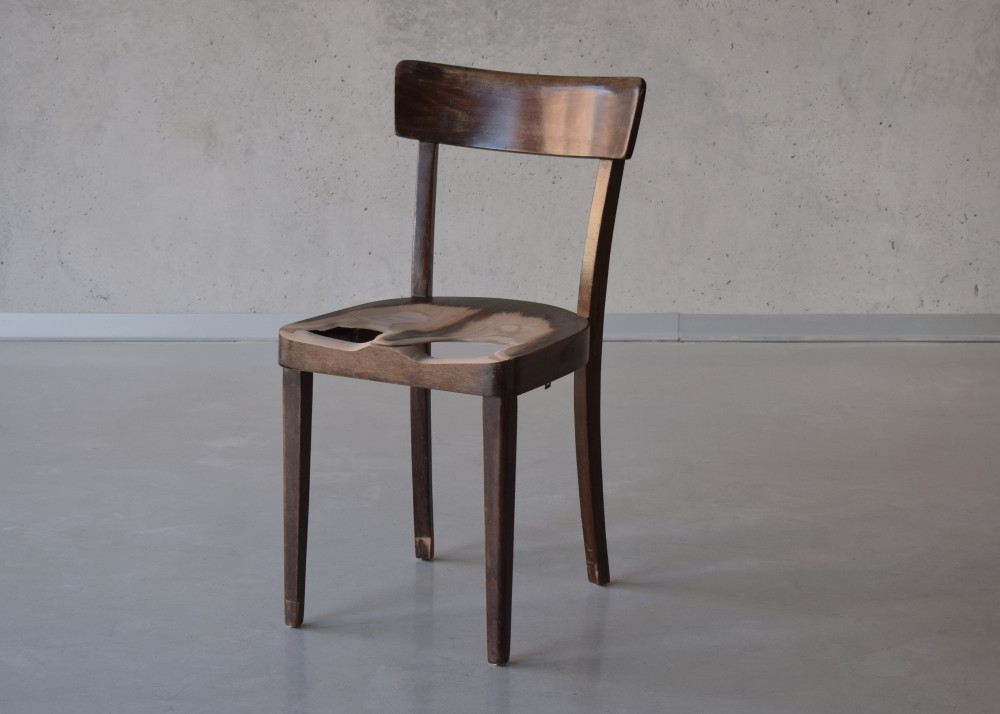
In my work, time and repetition express a longing for stability of state. Repetition, alongside its negative connotations of stagnation and stupidity, can also be read as something familiar and calming. Representing extended periods of time through a prolonged performative act – and thus through the actual passing of time – can only lead to ephemeral and temporary results. Is the desire for stability of state, for an action that endures forever, not best represented by permanently inscribing the action into a material, thereby solidifying it?